A stamped beryllium copper terminal passes 100% dimensional inspection and contact resistance testing at final QC, ships to the connector assembly line, and fractures at the bend root under 3.5 N of insertion force — well below the 8 N rated load. The fracture surface shows intergranular cleavage under SEM, confirming hydrogen embrittlement induced during the tin plating process and not baked out before packaging.
In this analysis, you will learn how to diagnose hydrogen embrittlement across three root cause categories — alloy susceptibility and tensile strength, plating bath chemistry and cathode efficiency, and post-plating bake temperature and dwell time — with corrective process controls verified through sustained-load testing per ASTM F519.
Read on for the full root cause analysis.
Fracture Symptom
Hydrogen embrittlement in stamped electrical terminals produces brittle fracture at loads far below the rated mechanical strength, typically during the first insertion cycle at the connector assembly station. The terminal snaps at a bend radius, a coined feature, or a cut edge — locations where residual tensile stress from forming concentrates the absorbed hydrogen at grain boundaries. The fracture surface shows a characteristic intergranular morphology with minimal plastic deformation, distinguishing it from ductile overload failure.
The failure is catastrophic and immediate — it does not propagate gradually like stress relaxation or fretting corrosion. A batch of 10,000 terminals with hydrogen embrittlement will produce zero-hour failures at rates of 2% to 15%, with the failure rate proportional to the residual tensile stress at the fracture location multiplied by the absorbed hydrogen concentration. Terminals that survive the first insertion cycle are not at risk of delayed hydrogen cracking under static load at room temperature if the post-plating bake was executed within the specified time-temperature window.
SEM Fractography
Section the fractured terminal at the break surface and examine under scanning electron microscopy at 500× to 2,000× magnification. Intergranular fracture with visible grain facets and secondary microcracks along grain boundaries confirms hydrogen embrittlement. Ductile dimple fracture with tear ridges indicates mechanical overload rather than hydrogen-induced failure — a critical distinction because the corrective actions for the two failure modes are unrelated.
Energy-dispersive X-ray spectroscopy of the fracture surface should show no corrosion products or plating residues. The presence of tin, nickel, or copper oxides on the fracture surface indicates that the crack initiated before plating and the fracture surface was subsequently coated — this is a pre-existing forming crack, not hydrogen embrittlement.
Root Cause Categories
Alloy Susceptibility
Hydrogen embrittlement susceptibility in copper alloys correlates with tensile strength and grain boundary chemistry. C17200 beryllium copper at full-hard temper with 1,200 MPa tensile strength is the most susceptible alloy in the terminal material family. The fine grain structure and beryllium-rich precipitates at grain boundaries create high-energy hydrogen trap sites that concentrate absorbed hydrogen at the locations where forming-induced tensile stress is also highest.
C51000 phosphor bronze at half-hard temper with 500 MPa to 600 MPa tensile strength shows moderate susceptibility. The tin content in phosphor bronze does not increase hydrogen absorption directly, but the cold-worked grain structure from half-hard temper rolling provides hydrogen diffusion paths along elongated grain boundaries. C26000 brass at any temper is the least susceptible due to its larger grain size and lower tensile strength — hydrogen diffuses through the grain interior rather than concentrating at boundaries.
The tensile strength threshold for measurable hydrogen embrittlement risk in copper alloy strip is approximately 450 MPa. Terminals formed from alloys below this threshold, including annealed-temper copper and low-zinc brass, do not require post-plating hydrogen bake relief. Terminals from C17200 at any temper require a mandatory post-plating bake regardless of plating chemistry because the alloy’s 1,200 MPa tensile strength places it above the embrittlement threshold at all hydrogen concentrations.
Plating Bath Chemistry
Hydrogen is generated at the cathode during electroplating as a side reaction of the metal deposition process. The volume of hydrogen produced is a function of cathode current efficiency — the percentage of total current that deposits metal rather than splitting water molecules into hydrogen gas.
A tin plating bath operating at 90% cathode efficiency generates approximately 0.5 mL of hydrogen gas per ampere-hour at the part surface. At 75% efficiency, hydrogen generation triples to 1.5 mL per ampere-hour.
Acid concentration in the plating bath directly controls the availability of hydrogen ions for absorption into the part surface. A sulfuric-acid-based tin bath at pH below 1.0 drives hydrogen ion concentration above 0.1 mol/L — sufficient to saturate the terminal surface with adsorbed hydrogen atoms before they recombine into H₂ gas and bubble away. Maintaining bath pH between 1.5 and 2.5 reduces the hydrogen ion concentration by a factor of 3 to 10 compared to a pH below 1.0.
Acid pickling before plating is a separate hydrogen source that is often overlooked in the root cause analysis. A 10% to 15% sulfuric acid pickle at 50°C for 30 to 60 seconds removes surface oxides but also injects hydrogen into the part surface at concentrations comparable to 30 minutes of electroplating. Reducing pickle time to 15 seconds or switching to a non-acid alkaline cleaner eliminates this pre-plating hydrogen load.
Post-Plating Bake Failure
The post-plating hydrogen bake is a time-temperature diffusion process, not a simple oven cycle. Hydrogen atoms trapped near the terminal surface must diffuse outward and escape before they migrate to grain boundary trap sites where they become immobile. The diffusion rate follows an Arrhenius relationship — at 190°C, hydrogen diffuses through copper at approximately 0.01 mm² per hour, meaning a 0.3 mm thick terminal requires 3 to 4 hours at temperature to evacuate mobile hydrogen from the center of the cross-section.
The critical failure mode is delayed bake. Hydrogen absorbed during plating remains mobile at room temperature for approximately 4 hours after the parts exit the plating bath. During this window, hydrogen atoms diffuse from the surface into the bulk material and become trapped at grain boundaries.
Once trapped, the bake temperature must be raised to 250°C to release them — but this temperature anneals cold-worked tempers and reduces terminal tensile strength by 10% to 15%, defeating the purpose of the heat treatment.
Deep Dive: Explore hydrogen embrittlement bake parameter development per ASTM B850 — including hydrogen concentration measurement by hot extraction, bake window validation at three time-temperature combinations, and sustained-load testing for lot acceptance — to establish a production-scale process control for high-strength copper alloy terminals.
Hydrogen Embrittlement Process Audit: Kravzik’s plating engineering team reviews your terminal plating process — including alloy grade and tensile strength, plating bath chemistry and cathode efficiency, pickle duration, and post-plating bake time-temperature profile — and returns a hydrogen embrittlement risk assessment with process control recommendations. Submit your plating process data for a hydrogen embrittlement risk audit.
Process Adjustments
Non-Destructive Adjustments
These adjustments modify the plating process parameters without requiring bath chemistry changes or equipment modifications.
- Verify cathode current efficiency at 85% or above using a Hull cell test with a brass cathode panel. If efficiency is below 85%, increase the tin metal concentration by 5 g/L increments and add organic brightener at the supplier-recommended replenishment rate until efficiency recovers.
- Reduce acid pickle duration to 15 seconds maximum at 50°C for C17200 terminals. For C51000 terminals with lighter surface oxide, replace the acid pickle with an alkaline electrocleaner at 60°C for 30 seconds to eliminate the pre-plating hydrogen source entirely.
- Confirm that post-plating bake begins within 2 hours of the parts exiting the final rinse tank. The 4-hour window is a maximum — targeting 2 hours provides a margin for production delays. Use a time-stamped process traveler that follows each plating rack from bath exit to oven entry.
- Increase bake temperature to 200°C if the current process uses 175°C to 190°C. The 10°C increase reduces the required dwell time by approximately 30% and provides a wider process window for hydrogen evacuation.
Process and Material Adjustments
These adjustments require plating bath reformulation, equipment modifications, or alloy specification changes.
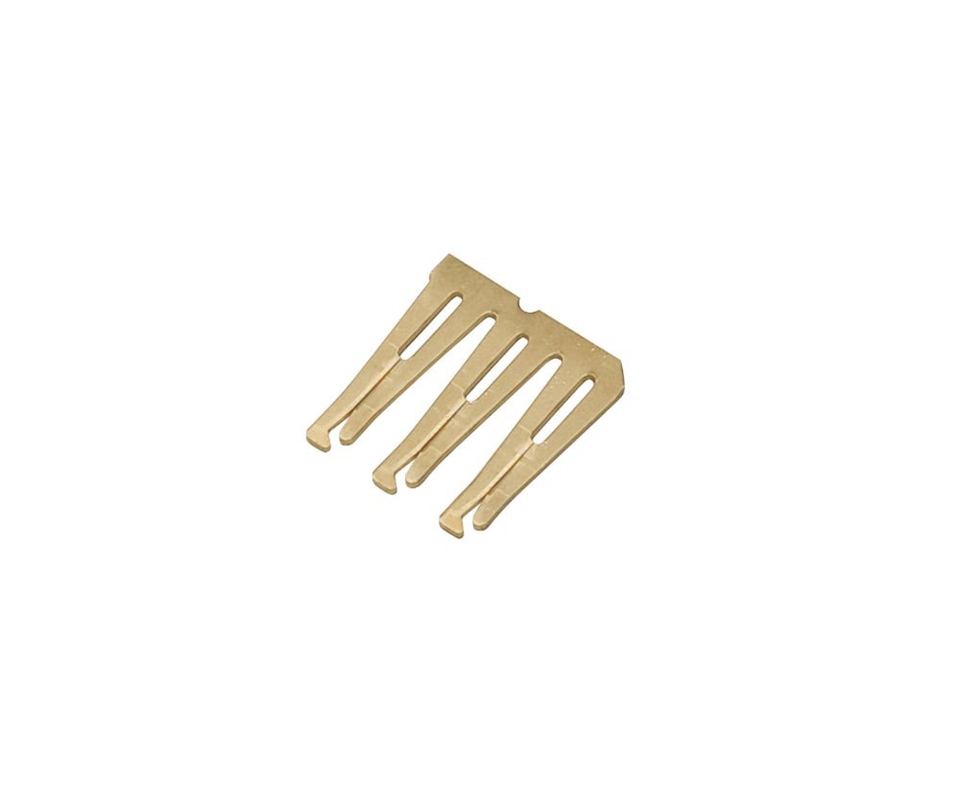
- For C17200 terminals with tensile strength above 1,100 MPa, specify a minimum post-plating bake of 200°C for 6 hours. Verify the bake effectiveness with ASTM F519 sustained-load testing on 10 terminals per plating lot at 75% of the rated tensile strength for 200 hours with zero failures required for lot acceptance.
- Install a hydrogen embrittlement relief oven dedicated to post-plating bake, separate from the general drying oven. The dedicated oven maintains temperature uniformity of ±5°C across the load — a general drying oven with ±15°C uniformity can leave parts on the cold side of the load with insufficient hydrogen evacuation.
- Substitute tin electroplating with immersion tin for C17200 terminals operating in safety-critical automotive applications such as airbag or ABS connectors, using a non-electrolytic immersion tin process that generates zero cathodic hydrogen. The immersion tin thickness is limited to 0.5 µm to 1.0 µm — verify that this thickness meets the connector durability specification before switching.
- Switch the terminal alloy from C17200 to C51000 phosphor bronze if hydrogen embrittlement failures persist after bake optimization. The tensile strength reduction from 1,200 MPa to 550 MPa eliminates the embrittlement risk at the cost of reduced contact force — compensate by increasing beam thickness by 15% to 20% to recover the contact force within the same deflection envelope.
For high-volume terminal programs where alloy substitution is the most definitive corrective method, contact progressive die tooling engineering to validate that the existing die set can form the thicker C51000 strip without exceeding the press tonnage limit at the bend station.
Verification Protocol
Sustained-Load Testing
Conduct sustained-load testing per ASTM F519 Type 1a on 10 terminals per plating lot. Apply a static tensile load equal to 75% of the terminal’s rated tensile strength at the bend root cross-section.
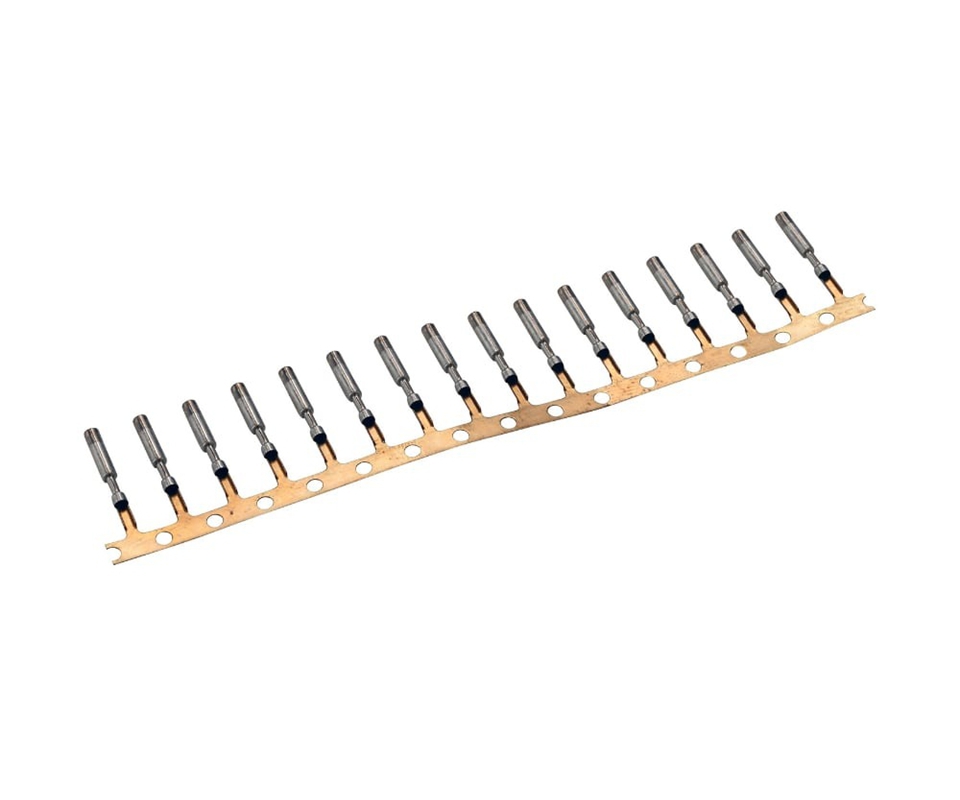
Hold the load for 200 hours at room temperature in laboratory air. Zero specimens shall fracture or show crack initiation under 20× magnification at the end of the test period.
If any specimen fractures during the 200-hour test, the plating lot fails the hydrogen embrittlement verification and requires re-baking at 200°C for an additional 4 hours, followed by re-testing of a new 10-piece sample. A second failure on the same lot after re-bake indicates that the hydrogen has diffused into irreversible grain boundary trap sites — the lot is non-recoverable and must be scrapped.
Production Lot Acceptance
For C17200 terminals, implement per-lot sustained-load testing as a production acceptance criterion, not a periodic audit. The cost of one field failure in a safety-critical connector system exceeds the cost of testing every plating lot for the life of the program. For C51000 terminals below 550 MPa tensile strength, reduce testing to one lot per month as a process monitoring check.
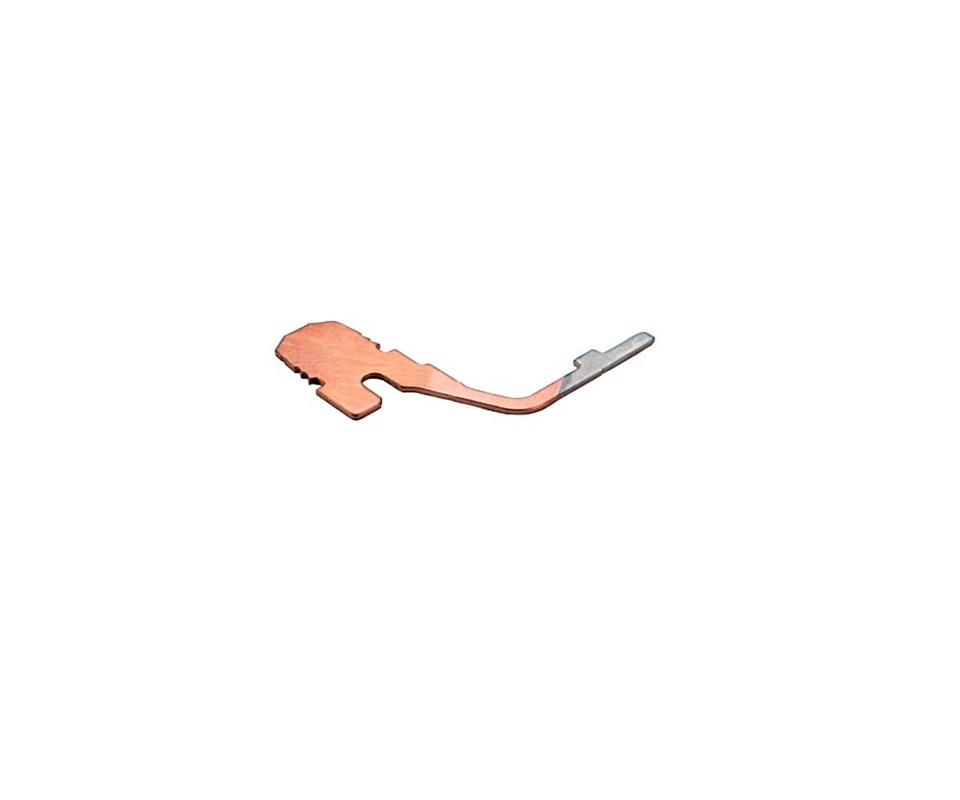
Document the bake time, temperature, and oven load configuration for each plating lot on the certificate of conformance. A terminal supplier that cannot provide bake process data for a specific lot of C17200 terminals has not executed the hydrogen relief step — reject the lot at incoming inspection regardless of dimensional conformance.
Plating Process Qualification: Kravzik’s plating engineering team qualifies your terminal plating process for hydrogen embrittlement compliance — including bath chemistry audit, bake oven thermal profiling, and ASTM F519 lot acceptance testing with SEM fractography of any failed specimens. Submit your terminal plating specification for a hydrogen embrittlement process qualification with bake parameter recommendations.
Fix & Verify
Increasing bake temperature to fix hydrogen embrittlement can anneal the temper and drop contact force below specification. Kravzik’s plating process integrates embrittlement control as a validated step — every C17200 lot bakes within 2 hours of plating exit with zero-failure ASTM F519 lot acceptance testing.
Send your terminal plating specification for a complete hydrogen embrittlement risk assessment with bath chemistry review, bake parameter development, and ASTM F519 lot acceptance testing, delivered within 72 hours.