A stamped electrical terminal that passes bench testing at 25°C can fail catastrophically after 50 autoclave sterilization cycles at 134°C. The failure surfaces only after implantation or when the surgical tray opens, at which point the recall cost dwarfs the terminal cost by 10,000×.
In this guide, you will learn sterilization-resistant material selection for medical stamped electrical terminals. You will also find ISO 13485 and FDA 21 CFR Part 820 compliance pathways and lot-level traceability protocols that distinguish a medical-grade supplier from a commodity stamper.
Read on for the full validation guide.
Sterilization Stressors
Medical terminals face conditions that commercial or automotive terminals never encounter. Autoclave sterilization subjects components to saturated steam at 134°C for 3–18 minutes per cycle, and devices typically undergo 50–500+ cycles over their service life.
Each cycle drives moisture into micro-pores in the plating. It accelerates galvanic corrosion at the base metal interface and degrades the spring properties of the contact beam. Ethylene oxide (EtO) sterilization introduces a different failure vector: residual gas absorption into polymer connector housings later outgasses and corrodes terminal contact surfaces.
Gamma radiation sterilization at 25–50 kGy embrittles certain copper alloys, reducing terminal normal force by 15–30% per accumulated dosage. A terminal specified for medical use must also resist repeated exposure to enzymatic cleaners, alcohol-based disinfectants, and saline conditions inside the body.
Sterilization Modality Selection
The material selection decision for medical terminals starts with the sterilization modality of the target device. Terminals destined for steam-autoclaved surgical instruments demand alloys that retain spring temper through repeated thermal cycling. Devices sterilized via hydrogen peroxide gas plasma require terminals with plating systems that resist oxidative attack.
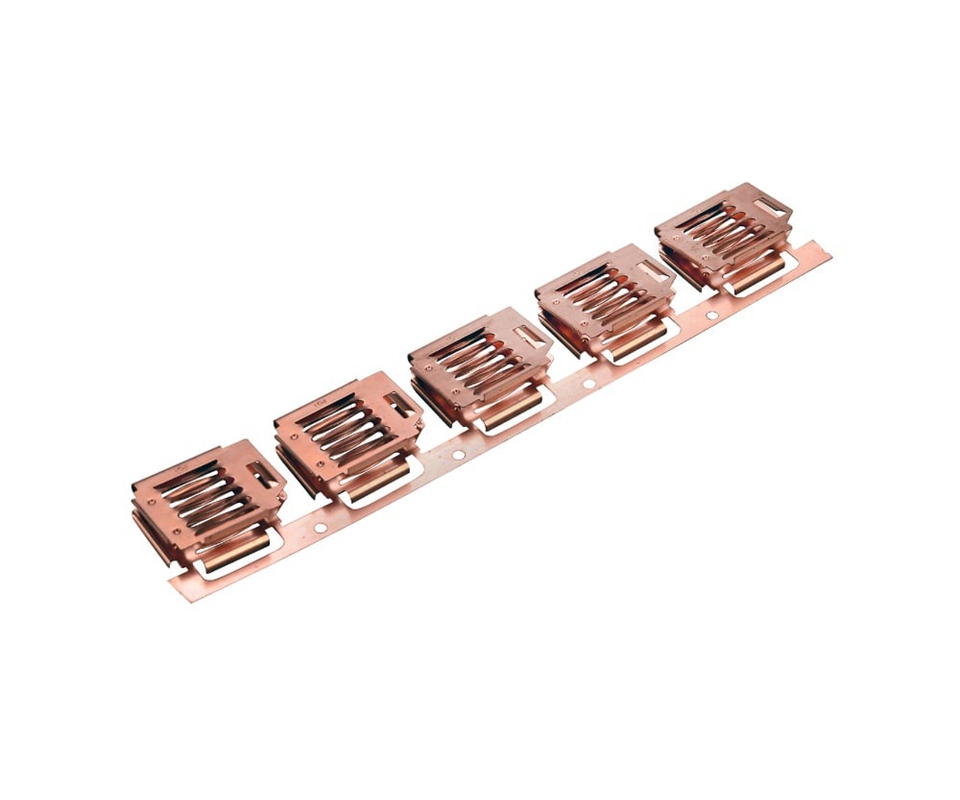
Single-use disposable connectors — sterilized once at the device manufacturer’s facility — tolerate a wider material envelope than reusable components facing hundreds of cycles. Each path drives a different set of medical device metal stamping material requirements, and confusing them leads directly to field failure.
[Compliance Anchor]: For an ISO 13485-compliant stamped terminal, the contact normal force must not drop below 0.5 N after 100 autoclave cycles at 134°C, verified through IEC 60068-2-14 thermal shock testing and USCAR-2 class III vibration exposure.
💡 Sterilization Validation Gap: Terminals qualified at room temperature can fail within 50 autoclave cycles at 134°C. Request a sterilization survival test for your terminal geometry before committing to a production alloy.
Regulatory Framework
Medical device electrical interconnects sit at the intersection of multiple regulatory domains, each with documentation requirements that cascade down to the terminal supplier. ISO 13485:2016 mandates full material traceability from raw coil to finished reel, linking each production lot to a specific heat number and plating bath log. FDA 21 CFR Part 820 requires design history files and device master records that include dimensional inspection data, plating thickness measurements, and sterilization validation reports for each terminal lot.
The EU Medical Device Regulation (MDR 2017/745) adds another layer: terminals classified as part of a Class IIb or Class III device require notified body review of the supplier’s process validation before market entry.
Biocompatibility and Material Declaration
Biocompatibility per ISO 10993-5 (cytotoxicity) and ISO 10993-10 (sensitization) applies to any terminal surface that contacts tissue or fluid. This requirement rules out certain tin-lead plating alloys and demands documented passivation and cleaning processes for stainless steel terminals used in surgical instruments.
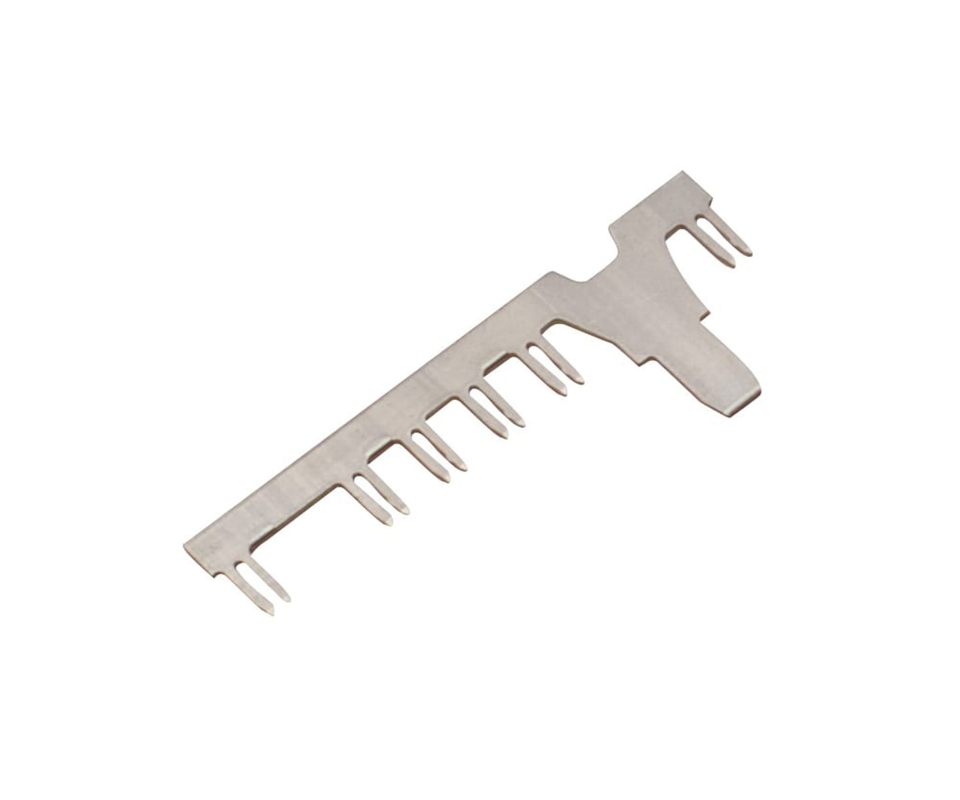
Material declaration per IPC-1752A establishes baseline REACH and RoHS 3 (EU 2015/863) compliance, confirming the terminal contains none of the 10 restricted substances above threshold. Beyond substance restrictions, the terminal supplier must also provide process validation documentation for every medical production line. This documentation includes installation qualification, operational qualification, and performance qualification per ISO 13485 section 7.5.6.
These documentation demands separate medical-grade stamped electrical terminals from commodity terminals in practical terms. A supplier that delivers terminals without material certs and without process validation data leaves the device manufacturer exposed during FDA audit. Kravzik supplies every medical terminal lot with EN 10204 3.1 material certificates, plating thickness reports per ASTM B568, and sterilization validation data packaged for direct insertion into the device history file.
[Compliance Anchor]: A medical stamped terminal supplier must hold ISO 13485:2016 certification with scope explicitly covering metal stamping and plating processes, deliver full material certificates per EN 10204 3.1 for every production lot, and maintain cleanroom packaging capability per ISO 14644-1 Class 7 or better.
Medical Stamped Terminal Archetypes
Medical terminals appear across device classes from single-use disposable connectors to permanently implanted neurostimulator leads. Each class imposes distinct electrical, mechanical, and sterilization demands.
Monitoring and Surgical Terminal Demands
Patient monitoring systems — ECG, SpO2, and blood pressure modules — rely on multi-pin stamped terminals inside disposable and reusable connectors. These terminals maintain contact resistance below 10 milliohms across 10,000 mating cycles, using gold-over-nickel plating on beryllium copper C17200 substrates for the spring contact beam. The high cycle count drives material choice: beryllium copper retains its normal force after repeated deflection where phosphor bronze C51000 relaxes and triggers intermittent signal dropout.
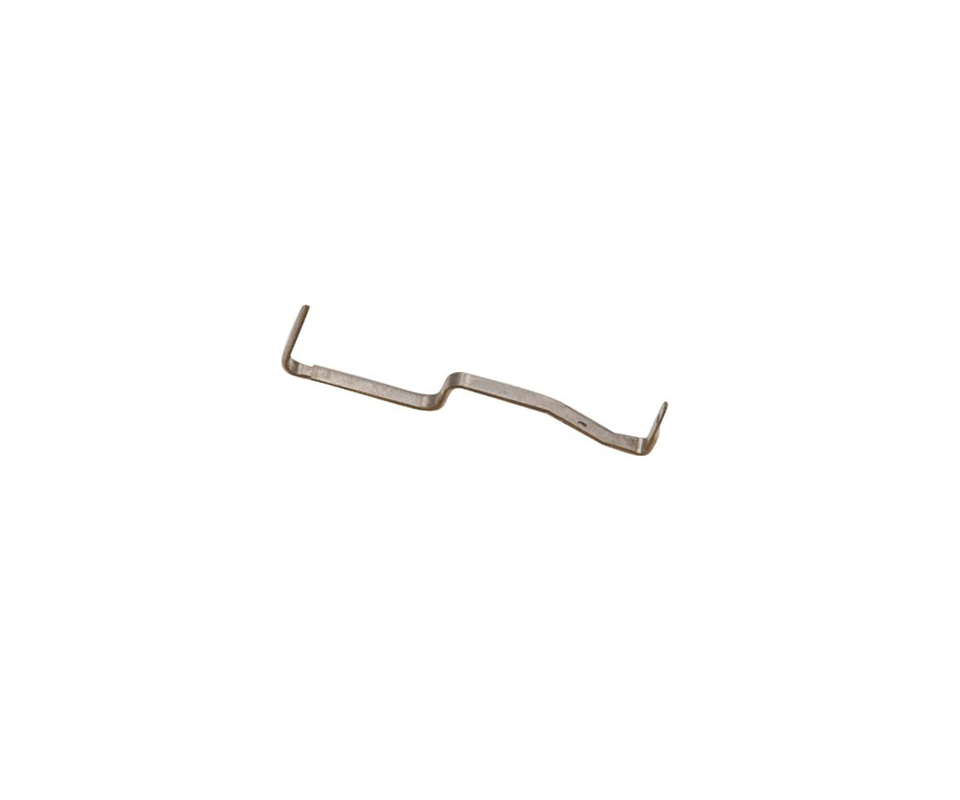
Surgical instruments represent a different stress profile. RF ablation probes, laparoscopic graspers, and ultrasonic scalpels use stamped terminals that deliver electrical current while surviving mechanical retention inside autoclavable handpiece connectors.
These terminals operate inside sealed connector bodies that trap moisture during cooling phases between sterilization cycles, creating a micro-environment where any plating void becomes a galvanic corrosion initiation site within 20–30 cycles. Surgical-grade terminals demand a pore-free nickel underlayer beneath the gold or silver topcoat, verified through nitric acid vapor porosity testing per ASTM B735.
Implantable and Diagnostic Requirements
Implantable devices carry the highest risk tier. Pacemaker and ICD header terminals employ platinum-clad or thick gold-plated stamped contacts that must endure decades of body fluid exposure without fretting corrosion, ion migration, or surface oxidation. Diagnostic imaging equipment like MRI coils and CT detector arrays impose an additional constraint: the terminal material must remain non-magnetic to prevent image artifacts.
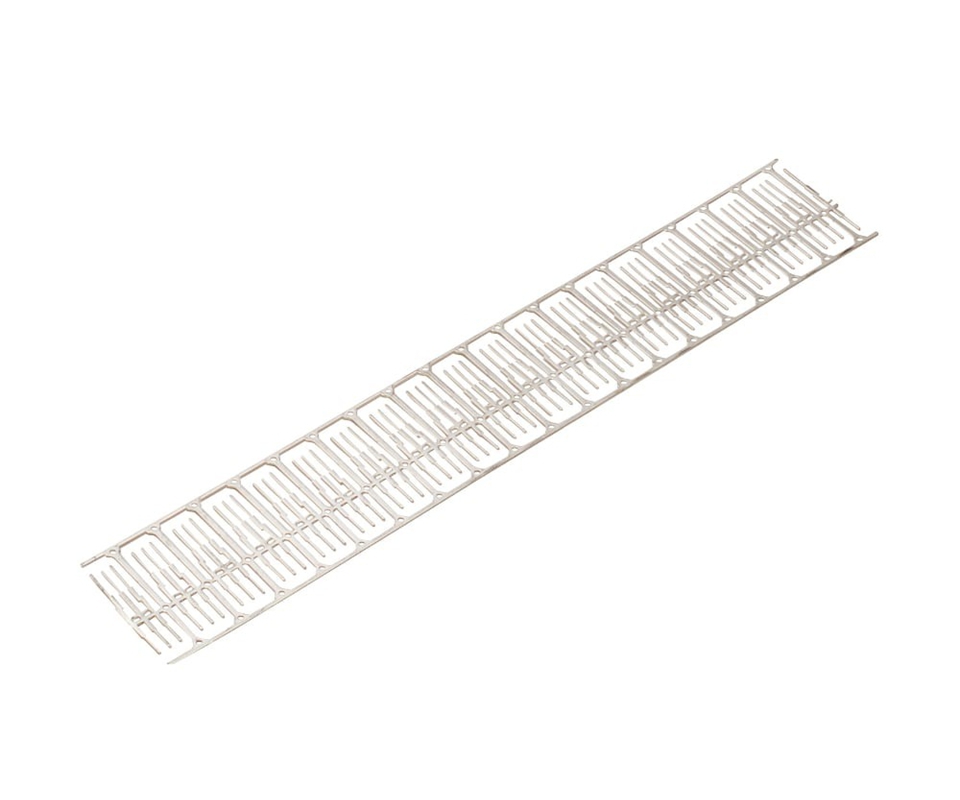
This drives selection toward phosphor bronze, specific 300-series stainless steel grades, or copper-beryllium with low magnetic permeability. Drug delivery pumps use micro-stamped terminals inside motor commutator assemblies, replacing brush-type contacts with lower-wear leaf-spring designs that survive 100,000+ partial rotations inside a sealed cartridge.
What each of these archetypes shares is a zero-tolerance boundary for medical industry stamping processes that fail to document every process parameter. A terminal that passes electrical test at the stamper’s facility can still fail after the device manufacturer’s sterilization cycle when the stamper validates plating adhesion at room temperature but not at 134°C saturated steam conditions. Kravzik validates every medical terminal lot for sterilization survivability before shipment, using autoclave cycle testing at the actual sterilization temperature of the target device.
[Compliance Anchor]: Any stamped terminal intended for patient-contact devices requires ISO 10993-5 cytotoxicity testing on the finished plated part per ISO 10993-12 sample preparation protocol. Testing only raw substrate material is insufficient. Plating chemistry alone introduces cytotoxic leachables that a substrate-only test would miss.
💡 Material Selection for Your Device: Alloy and plating choice depends entirely on whether your device faces steam, EtO, gamma, or hydrogen peroxide sterilization. Submit your target sterilization modality for a material recommendation aligned with your specific device classification.
Risk Mitigation
When a terminal lot reaches the medical device assembler, the cost of discovering a nonconformance has already multiplied. A single reel with misaligned selective gold plating — undetected until the device’s final electrical test — can scrap an entire production run of populated circuit boards.
Lot-Level Traceability
The defense starts at raw material reception. Every coil of copper alloy arriving at Kravzik carries a mill test certificate listing chemical composition, tensile strength, elongation percentage, and grain size per ASTM E112. This certificate forms the first link in the device history record chain that ISO 13485 auditors trace during surveillance audits.
During production, in-line machine vision systems scan 100% of terminals at speeds exceeding 800 strokes per minute, inspecting burr height, plating coverage, and dimensional conformance. Each reel receives a unique lot identification code linking to the specific stamping die, plating batch, and inspection data file — retrievable within 24 hours per 21 CFR Part 820.65 requirements. For terminals shipping into cleanroom assembly environments, the final reel is sealed inside an ISO Class 7 cleanroom and carries a certificate of conformance listing every applicable standard, from material composition to plating thickness distribution measured at five points per strip.
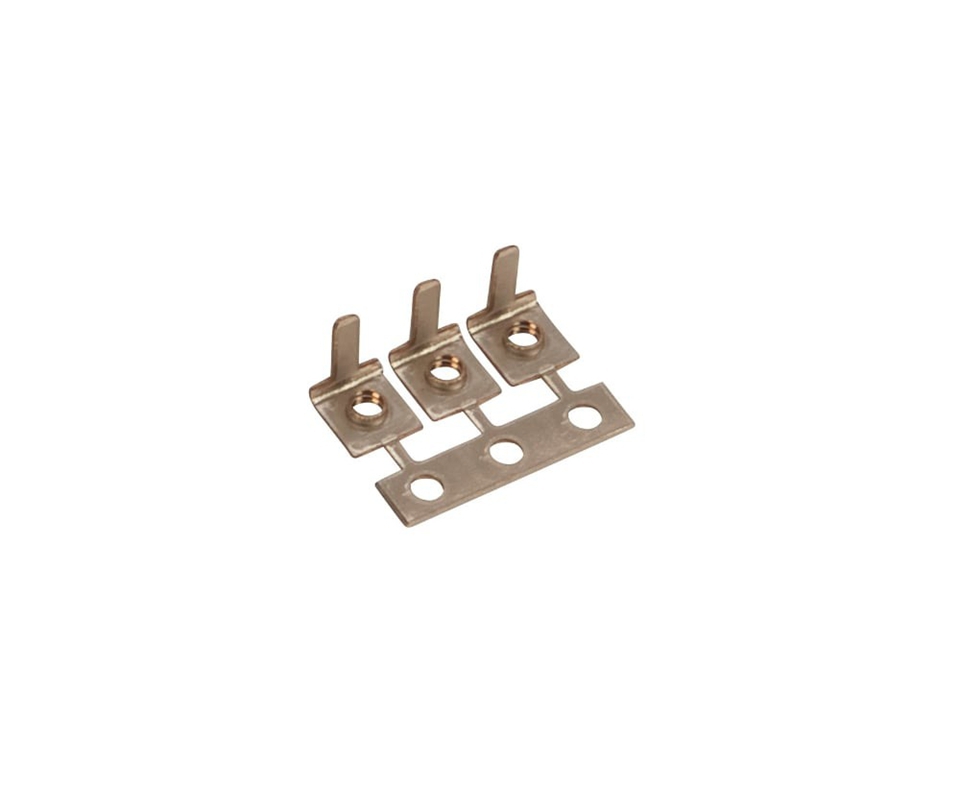
This level of traceability converts a recall scenario from “scrap every device in the field” to “identify and isolate the single affected production lot.” Suppliers without lot-level traceability force their medical device customers into worst-case containment actions — full field product removal — because the OEM cannot prove which lots contain conforming terminals. In medical contexts, this difference carries patient safety implications beyond the financial impact.
Corrosion Prevention and Passivation
Corrosion prevention forms the second pillar of risk mitigation in passivation and surface treatment of medical terminals. Stainless steel terminals undergo citric or nitric acid passivation per ASTM A967 to remove free iron from the surface and build a uniform chromium oxide layer.
Copper alloy terminals require a pore-free nickel diffusion barrier beneath the gold contact layer. This barrier, verified through nitric acid vapor testing per ASTM B735, prevents copper migration through the gold surface during repeated sterilization cycles.
[Compliance Anchor]: Full forward and backward traceability per 21 CFR Part 820.65 demands that the terminal supplier maintain device history records with lot-level inspection data — including dimensional reports, plating thickness certificates, and sterilization validation results — retrievable within 24 hours of a device manufacturer’s request.
Compliance Pass
Terminal lots reaching the assembly line without material certs and sterilization validation leave FDA submissions exposed. Kravzik’s ISO 13485-certified stamping line delivers full lot traceability from raw coil mill certificate to finished reel, with every lot shipping dimensional reports, plating certs, and process validation documentation for your device master record.
Send us your terminal requirements for a sterilization-validated compliance package, delivered with full EN 10204 3.1 material certs ready for your FDA submission file.
Related Engineering Resources
- Material specifications and alloy comparison data for copper-based terminal substrates in stainless steel material data sheets, including passivation compatibility per ASTM A967
- Surface finish selection for medical device electrical contacts, covering gold, palladium-nickel, and selective plating approaches in gold and silver plating process capabilities
- Supplier quality management and process control documentation for medical device OEMs under IATF-style quality management systems adapted for medical stamping workflows