A procurement specialist places a 50,000-piece order for screw-machined C17200 contact pins at $0.35 each because the program needs parts in two weeks — six months later, the annual volume hits 200,000 pieces and the $70,000 machining spend erases the margin on the entire connector program. A stamped electrical terminal made from the same alloy on a progressive die would have amortized to $0.012 per part after the first 5,000 units, paying back the tooling cost within the first production month.
This comparison maps the volume thresholds, tolerance boundaries, and material economics that determine whether stamped electrical terminals or screw-machined pins deliver the right balance of cost, precision, and lead time for your connector program.
Read on for the full comparison.
When Progressive Die Stamping Wins
Spring Contact Integration
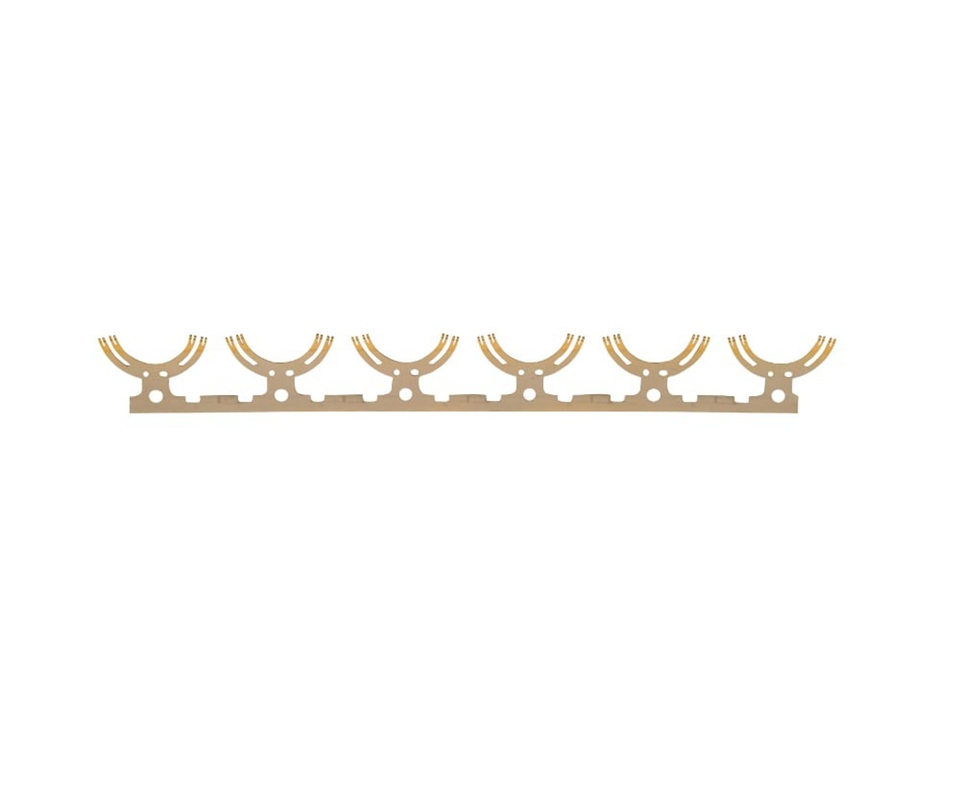
Stamping can integrate a spring contact beam into the terminal body as a single piece-part. The progressive die forms the contact beam bend, coins the contact surface flatness, and profiles the beam width —all within the same die that produces the terminal blank. A screw-machined pin requires a separate spring element —typically a stamped-and-formed clip or a coiled spring pressed into a machined housing —because screw machining cannot produce a thin, flexible beam from bar stock without making the stock diameter large enough to accommodate the beam thickness.
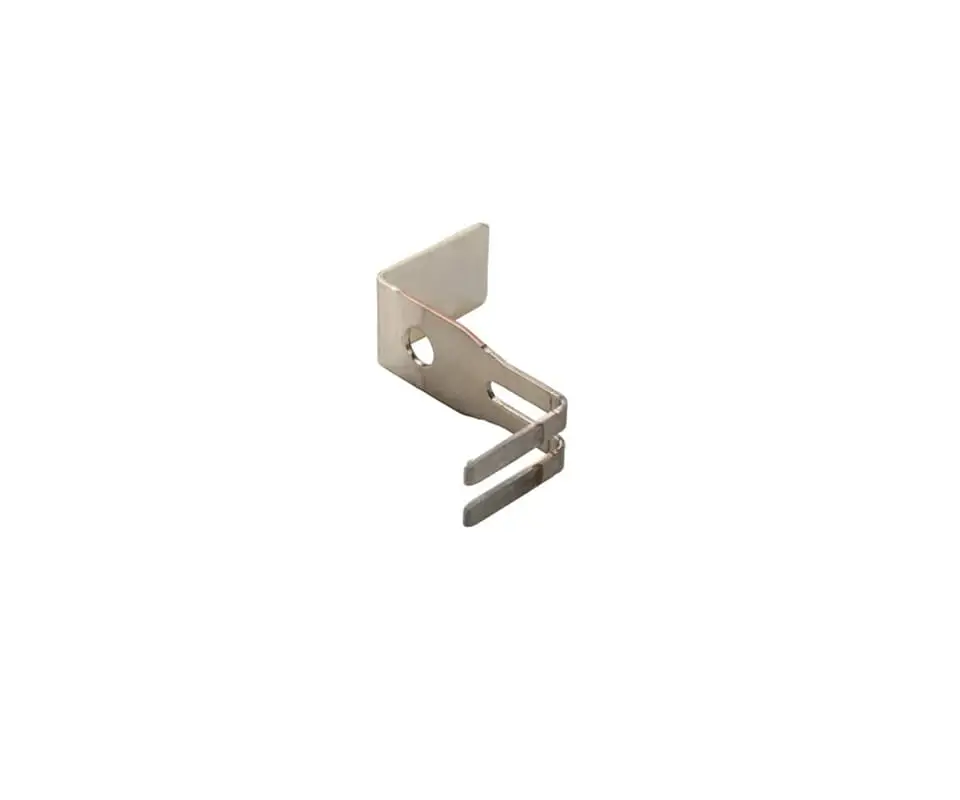
This integration advantage eliminates an entire assembly step and the associated tolerance stack. For stamped electrical connectors in high-density applications where contact pitch drops below 2.0 mm, the single-piece stamped terminal with integrated spring beam occupies less space than a two-piece screw-machined pin assembly and eliminates the contact resistance variability that the pin-to-spring interface introduces. Kravzik‘s progressive die capability integrates piercing, coining, forming, and in-die staking into a single die set for stamped electrical terminals that ship as complete, assembly-ready contact elements.
Plating Logistics at Scale
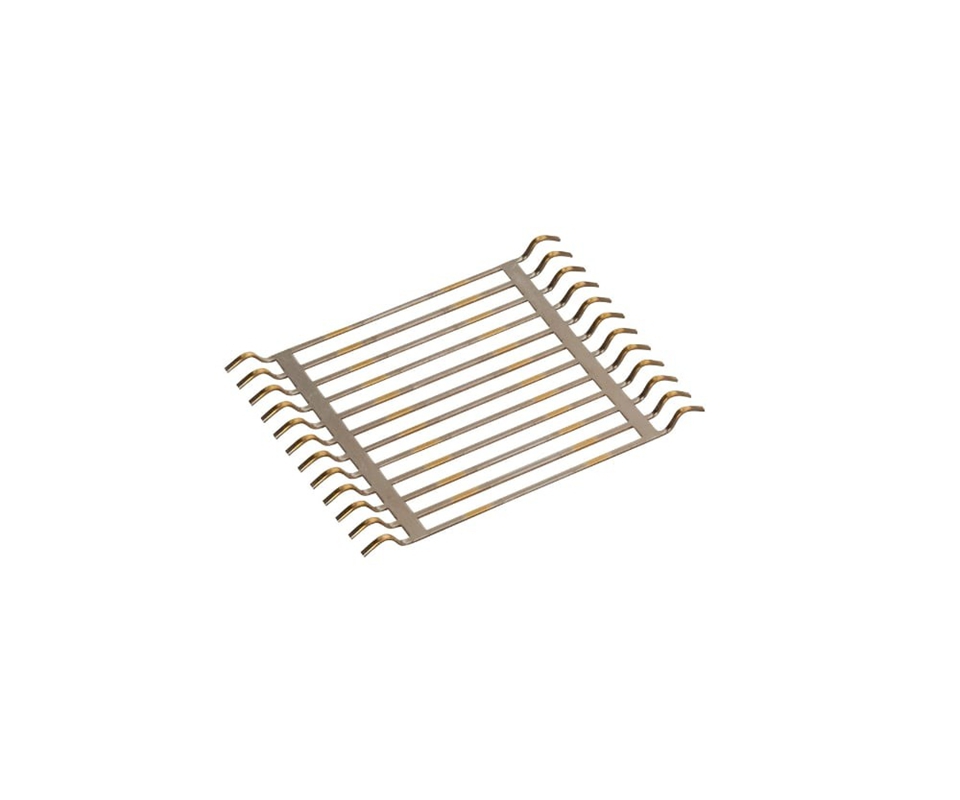
Stamped terminals remain attached to their carrier strip after forming —a continuous web that feeds directly into reel-to-reel selective plating lines. This integrated workflow deposits precious metal only on the contact interface zone, preserving gold or silver inventory and eliminating part handling between forming and plating. Screw-machined pins are individual loose pieces that must be bulk-plated in barrels.
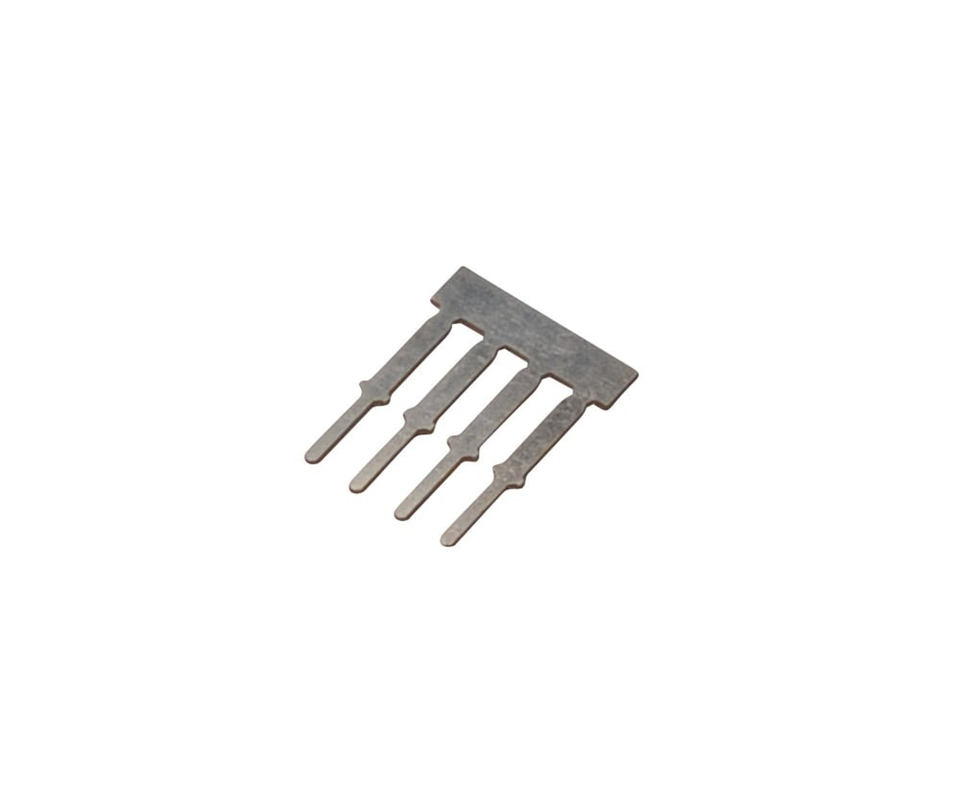
Barrel plating plates the entire part surface —wasting 60–80% of the precious metal on non-functional areas. Selective reel-to-reel plating deposits material only on the functional contact surface
For a terminal requiring 0.75 µm of gold on the contact zone, selective reel-to-reel plating consumes approximately 0.03 grams of gold per 1,000 terminals. Bulk barrel plating the equivalent screw-machined pin consumes 0.12 grams —a 4× difference that adds $0.02 to $0.05 per part at current gold prices of $60 per gram. Kravzik operates in-house reel-to-reel tin plating and precious metal plating lines adjacent to the press floor, maintaining a closed-loop process for electrical component metal stamping that eliminates the transit and queue delays of outsourced bulk plating for screw-machined parts.
[Verdict]: If your annual production volume exceeds 5,000 units and your contact design includes an integrated spring beam, choose progressive die stamping.
When Screw-Machined Pins Win
Ultra-Precision Interconnect Requirements
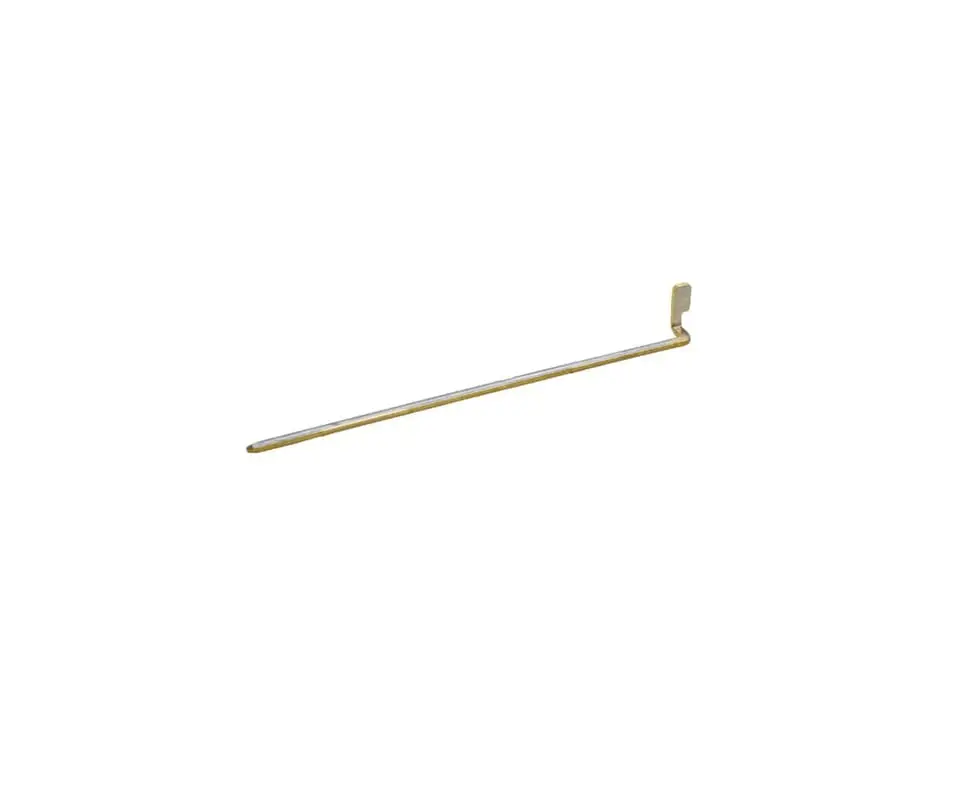
Screw machining achieves ±0.005 mm dimensional tolerance on turned diameters —approximately 2× to 10× tighter than stamping’s ±0.01 to 0.05 mm range. This precision matters for applications where the pin diameter controls the insertion and withdrawal force in a machined socket. Military circular connectors per MIL-DTL-38999, high-reliability test sockets for semiconductor burn-in boards, and precision instrumentation connectors —these applications specify machined pins because the controlled-diameter shank ensures insertion force stays within the 0.5 to 3.0 N per contact specification that governs connector mating cycle life.
The stamped terminal’s burr —a 0.01 to 0.05 mm ridge on the sheared edge —is functionally irrelevant for most commercial connector applications where the terminal slides into a plastic housing cavity with generous lead-in chamfers. In a gold-plated socket with 10-micron interference fit, a 0.03 mm burr on the pin shank scores the socket plating on first insertion and doubles the contact resistance within 50 mating cycles. Screw-machined pins, with their burr-free turned surface, eliminate this wear mechanism.
For stamped electrical contacts in standard commercial connectors, the burr is controlled through die maintenance and oriented away from the contact path —a manufacturing discipline that closes the tolerance gap for all but the most demanding interconnect applications.
Prototype and Bridge Production
Screw machining requires no hard tooling. A CNC program and collet setup costs $500 to $2,000 and produces first articles in 3 to 7 days. When a connector program is in the design validation phase and needs 100 to 500 pins in two weeks, screw machining is the only viable route.
A $35,000 progressive die with an 8-week lead time cannot serve a 2-week prototype window.
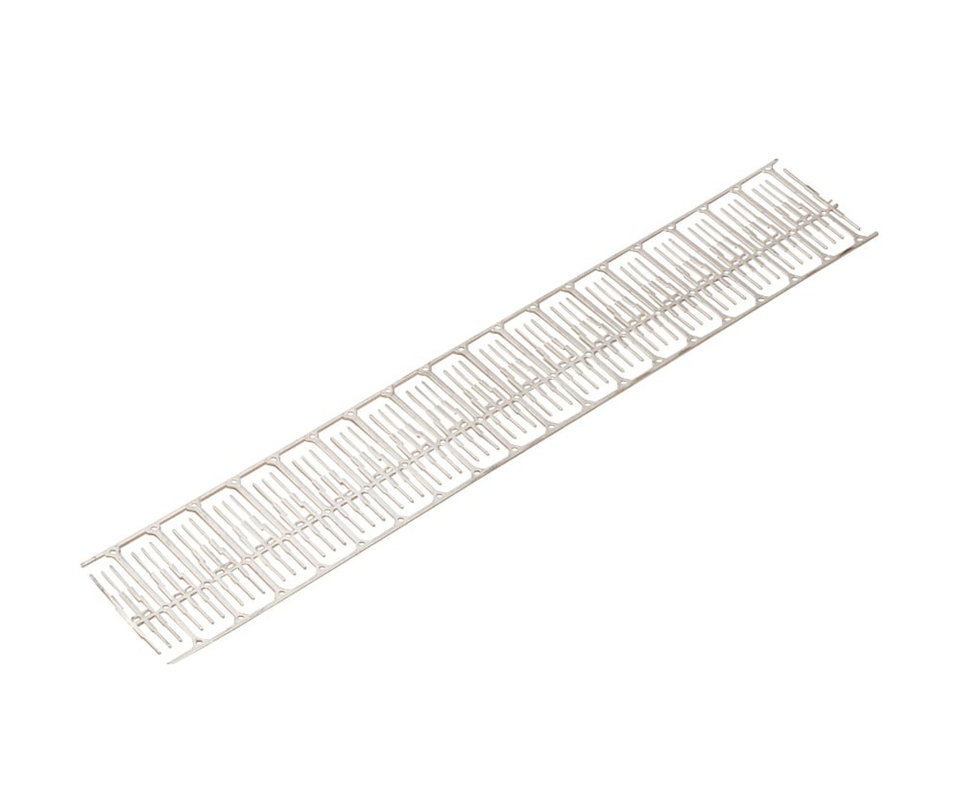
This speed advantage extends to bridge production scenarios. If a progressive die fails mid-production and replacement inserts are 2 weeks out, screw-machined pins can fill the production gap and prevent a line-down situation.
This prototype-to-production bridging capability makes screw machining a complementary process to stamping rather than just a competitor. Kravzik uses screw-machined prototype pins to validate the connector interface design —insertion force, contact resistance, mating cycle durability —while the production progressive die is being built. Once the die is validated and production volumes ramp, the program transitions to stamped terminals at 90% lower per-part cost.
This dual-path approach eliminates the risk of committing to a $35,000 die for a contact geometry that fails validation testing for terminal stamping programs in active design iteration.
Material Flexibility for Exotic Alloys
Screw machining processes any machinable conductive alloy without concern for formability. Free-machining brass C36000, tellurium copper C14500 with its superior machinability rating, and high-conductivity copper C11000 in half-hard temper —these materials machine cleanly but tear or crack during stamping because their formability is compromised by the alloying elements that improve machinability. A stamped terminal requires an alloy that balances conductivity and formability —typically C19400 or C51000 phosphor bronze —which limits the electrical performance ceiling for high-current applications.
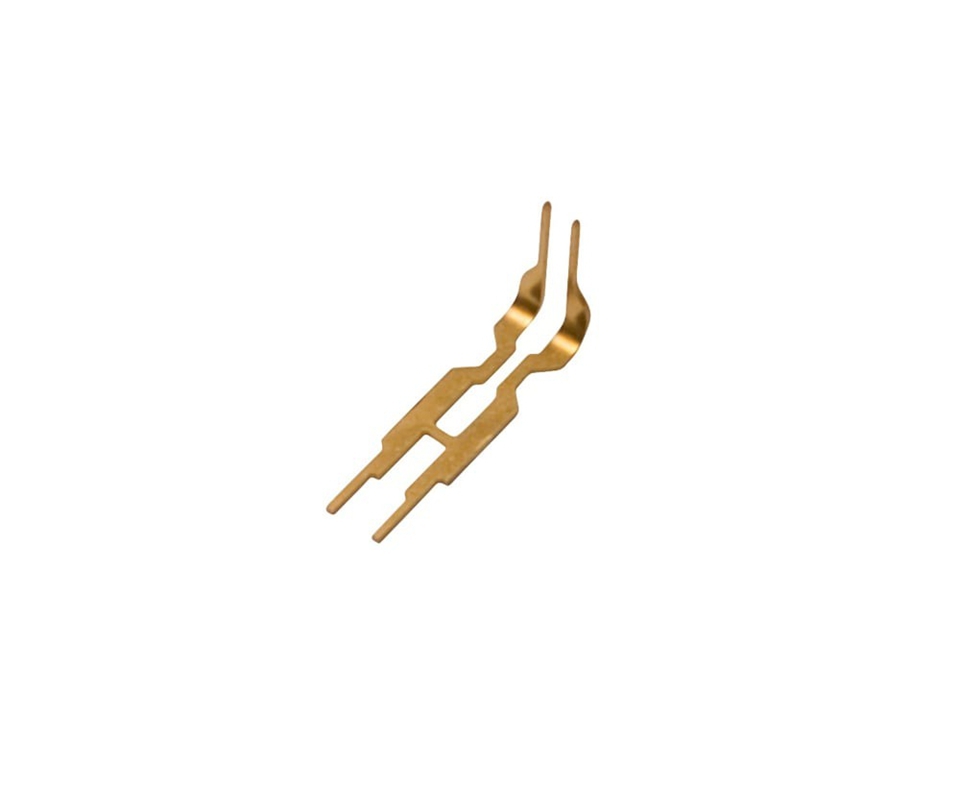
A screw-machined C11000 pin delivers 101% IACS conductivity. The theoretical maximum for copper. The highest-conductivity stampable copper alloy, C19400, delivers 60—strong>70% IACS.
For a 50-amp connector pin, this 40% conductivity gap translates to a 0.6 mm diameter increase in the stamped terminal to carry the same current without exceeding an 85°C temperature rise.
In a 1.5 mm pitch connector, that diameter difference consumes enough real estate to force a larger housing —which can cascade into a larger connector footprint. Screw-machined pins from high-conductivity alloys enable compact, high-current connector designs that stamping’s alloy constraints cannot replicate in the same form factor for bronze terminal stamping applications.
[Verdict]: If your pin diameter tolerance must hold ±0.005 mm, your alloy requires 90%+ IACS conductivity, or your annual volume is below 5,000 units with immediate delivery requirements, choose screw machining.
Hidden Trade-offs & Engineering Limits
Material Waste and Its Cost at Scale
The material utilization gap between stamping and screw machining is the hidden cost driver that procurement teams often miss. Stamping nests parts on a strip with 70–85% copper alloy utilization —the skeleton scrap is recycled but the majority of the purchased strip becomes finished parts. Screw machining turns 60—80% of the bar stock into chips.
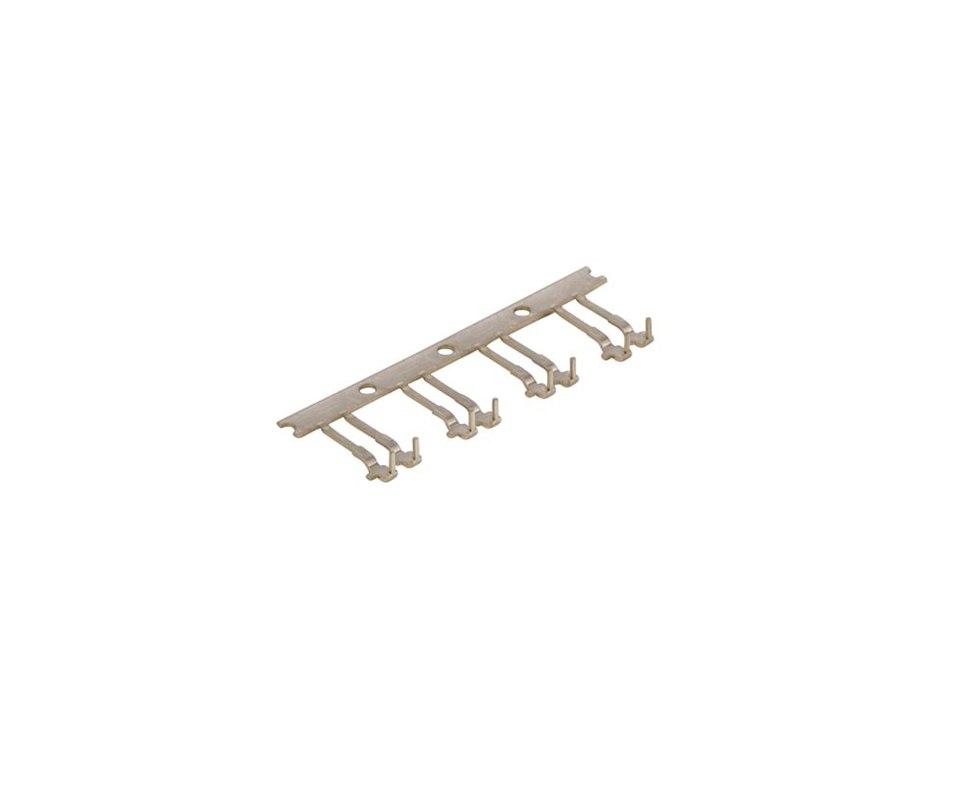
On C17200 beryllium copper bar stock at $12 per pound, each screw-machined pin costing $0.25 includes $0.06 to $0.08 in material that leaves the machine as waste —and only 30—strong>50% of the scrap value is recoverable because the chips are contaminated with cutting fluid.
This material waste differential compounds geometrically at production volumes. A 500,000-piece annual program in C17200 beryllium copper wastes approximately 1,800 pounds of alloy as machining chips at a net cost of $9,000 to $12,000 per year —enough to pay for half the progressive die that would produce the same parts at 90% lower per-part cost. For stamped electrical components in high-volume automotive programs, switching from screw-machined to stamped C19400 or similar formable alloy eliminates this material waste entirely and lowers the BOM cost by an order of magnitude for electrical stamping applications above 5,000 annual units.
Continuous versus Interrupted Grain Structure
Screw machining cuts through the bar stock’s grain structure —the continuous grain flow that gives wrought metal its fatigue resistance is severed at every turned surface. A stamped terminal preserves the grain structure through plastic deformation. The grain lines flow around bend radii and along the contact beam, creating a continuous load path that improves fatigue life in cyclic loading applications.
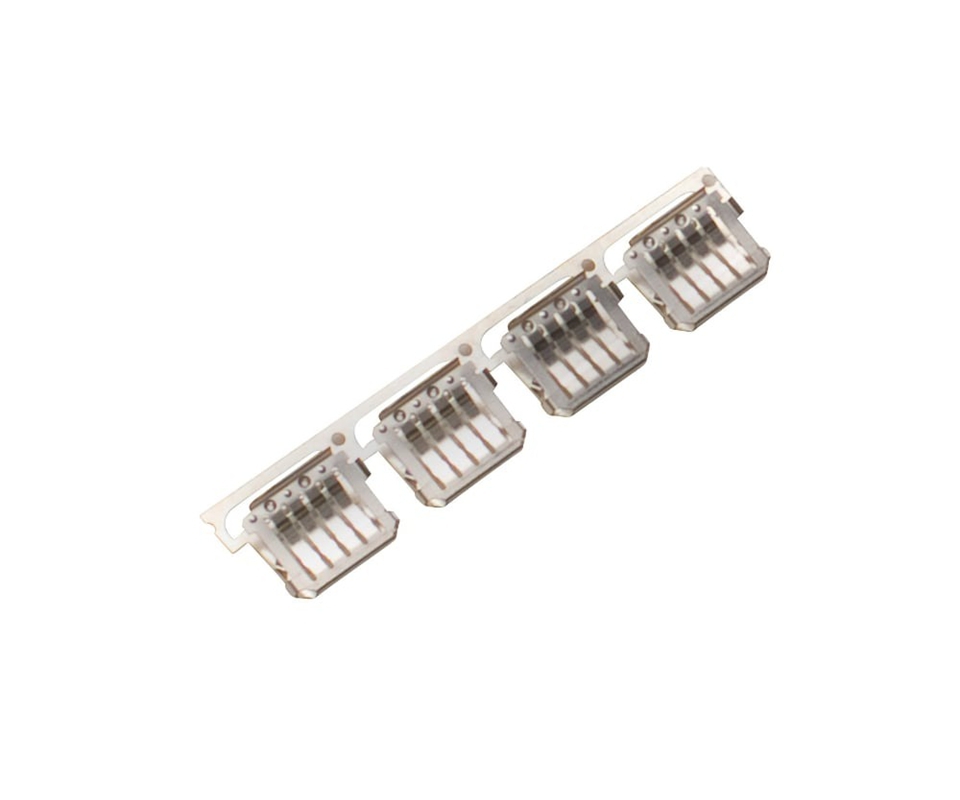
This grain-structure advantage is measurable. Stamped phosphor bronze spring contacts tested to 100,000 deflection cycles at 80% of yield stress show 40—strong>60% longer fatigue life than screw-machined pins of the same alloy and cross-section, because the machined pin’s interrupted grain structure creates stress concentration points at every turned shoulder and undercut.
This fatigue advantage makes stamping the preferred manufacturing route for electrical stamping parts in automotive connectors where vibration-induced micro-motion subjects the contact beam to millions of low-amplitude deflection cycles. The continuous grain flow through a stamped and formed contact beam resists crack initiation better than the interrupted grain structure of a turned pin —a difference that manifests as lower field failure rates in high-vibration under-hood environments where connector reliability directly affects vehicle warranty cost.
Design Iteration Cost and Hybrid Programs
The smartest sourcing strategy is often a hybrid. Screw-machine prototype pins during the design validation phase validate the connector interface —contact resistance under thermal cycling, insertion force across the tolerance band, mating cycle durability. Once the design is frozen, the program transitions to stamping for production volumes.
This hybrid approach uses each process for its strength: screw machining for speed and precision during prototyping, stamping for cost and throughput during production.
Kravzik supports this hybrid model. Our application engineering team produces screw-machined prototype pins from your CAD data in 7 days, runs the full connector validation test plan, and builds the progressive die for stamped electrical terminal production only after the contact geometry passes validation. This approach eliminates the risk of a $35,000 die that requires modification because the contact beam normal force was 0.3 N below specification.
A difference that screw-machined prototypes catch during validation but a production die does not reveal until the first stamped articles come off the press 8 weeks later.
The $1,500 spent on screw-machined prototypes is the cheapest insurance against a progressive die rework for terminal stamping programs in design freeze.
Critical Risk: A progressive die built for a contact geometry that fails insertion force testing costs $35,000 to build and $5,000 to modify. Screw-machined prototypes cost $1,500 and validate the same parameters in 7 days. Always validate the contact interface with machined prototypes before commissioning a production stamping die.
💡 Dual-Path Analysis: send us your pin drawing with annual volume for a stamped-versus-machined cost analysis, including a prototype-to-production roadmap and tooling amortization schedule.
The Final Call
Machining connector pins at 45 seconds per part for 150,000 annual units persists because the original prototype process was never re-evaluated for production scale. Kravzik evaluates your pin design against both stamped and machined paths with transparent per-part cost, tolerance capability, and lead time data for each option.
Submit your contact pin drawing for a comparative stamped-versus-machined cost model with prototype-to-production roadmap, returned within 3 business days.